
Subtotal $0.00


 aaaaaaaaaaaaaaa
By: Rashid Ga ’al
19 September 2025
Somalia’s displacement crisis isn’t just a humanitarian emergency—it’s a long-term reality shaping
the country’s future. More than 3.8 million Somalis remain uprooted by conflict, drought, and floods.
For them, “durable solutions” aren’t abstract policy terms. They’re about survival, stability, and dignity.
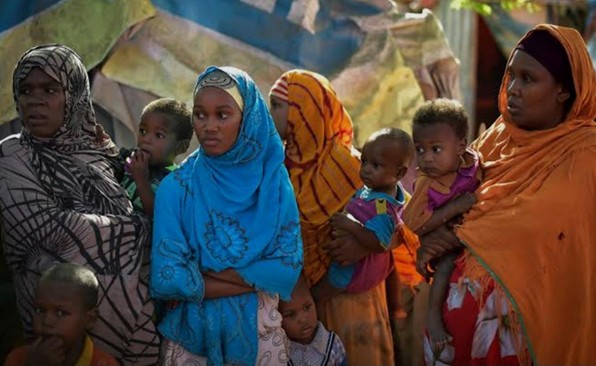
Women and children in Somalia gather in a moment of attentiveness and concern. Their vibrant traditional clothing and expressions reflect both resilience and the urgency of inclusion.
Over the past decade, Somalia has made real progress on paper. The government has adopted a National Durable Solutions Strategy, a Policy on Refugee-Returnees and IDPs, and city-level action plans that align with global frameworks. International partners have backed these efforts with pilots, assessments, and coordination platforms.
But for families living in informal settlements on the edges of Mogadishu, Baidoa, or Kismayo, the promise of durable solutions still feels distant. The gap between policy and practice remains wide.
So, what does a durable solution actually look like?
It means displaced people can live safely, access basic services, earn a living, and participate in public life—whether they return home, integrate locally, or relocate elsewhere. It requires secure housing and land tenure, equal access to schools and clinics, livelihoods that can withstand shocks, and a voice in decision-making.
The evidence is clear. According to the Durable Solutions Progress (DSP) Survey 2024–2025, nearly 70% of Somalia’s internally displaced people (IDPs) live in urban centres. Of those, 66% say they want to integrate locally. Only 30% prefer to return to their place of origin, and just 4% are undecided or want to move elsewhere.
Cities are central to the solution. But systemic gaps persist.
Land insecurity leads to repeated evictions. Short-term, fragmented financing prevents long-term upgrades to settlements and infrastructure. Weak accountability means data rarely informs municipal budgets or enforceable rules. And while displaced communities are often consulted, they’re rarely empowered to co-decide.
The Durable Solutions Landscape Assessment (DSLA) by ReDSS warns that without accountability, sectoral integration, and genuine inclusion, policies risk becoming “paper commitments.”
Because most displaced Somalis live in cities, durable solutions must be part of urban development—not a separate humanitarian track. That means municipalities need to map settlements, issue occupancy certificates, and enforce anti-eviction laws. Informal neighbourhoods should be upgraded with roads, lighting, drainage, and water points. And displaced and host communities must have equal access to schools, clinics, and civil documentation.
The DSP Survey shows the impact of municipal action. In Baidoa and Doolow—where inclusion investments have been made—over 85% of IDPs want to stay and integrate. In Daynile and Kahda, where tenure insecurity is high, nearly half prefer to return to their place of origin.
Livelihoods are another cornerstone of durable solutions. Training alone doesn’t create jobs. Skills programmes must match market demand. That means preparing workers for sectors like construction, logistics, digital services, and climate-smart agriculture. It also means expanding access to finance—through microcredit, diaspora-backed funds, and de-risked lending—and enforcing fair work standards to prevent exploitation.
IOM Somalia’s Danwadaag Consortium and Saameynta Programme show what’s possible. When displaced people are connected to functioning value chains—like urban construction or small-scale agro-processing—self-reliance grows, dependency shrinks, and host community’s benefit.
Climate change adds another layer of urgency. Droughts and floods are now the leading drivers of displacement in Somalia. Any solution that ignores climate risk won’t last.
Cities must invest in flood protection, drainage, and resilient water systems. Peri-urban areas need diversified, climate-resilient livelihoods. Tools like micro-insurance and community savings can help families protect assets when disaster strikes. The DSLA stresses that climate adaptation must be integrated into durable solutions—not treated as a separate issue.
Financing is key. Durable solutions need multi-year, pooled funds tied to measurable outcomes. Short-term grants won’t cut it. Donors, the diaspora, and the private sector should pool resources into city-level “solution compacts” with clear targets and transparent reporting.
Somalia’s diaspora sends home over $1.3 billion annually. If even a fraction of that were channelled into housing, jobs, and infrastructure—through regulated, transparent investment vehicles—it could be transformative. Predictable financing builds trust. Communities need to see promises kept. Municipalities need confidence to plan beyond the next grant cycle.
Governance and accountability are non-negotiable. Municipalities must expand the issuance of IDs, birth certificates, and property documents. They must enforce anti-eviction protocols, strengthen local dispute-resolution mechanisms, and include displaced communities in budgeting and planning.
The DSP Survey found that households with documentation and recognized tenure report significantly higher levels of security and access to services than those without.
The diaspora and private sector already finance families, firms, and infrastructure. The challenge now is to channel that energy into accountable, pro-poor city building. Diaspora-municipal investment notes could fund affordable housing and utilities. SMEs hiring from displacement-affected communities could receive equity-style capital and technical assistance. Corporate partnerships could extend water and energy networks into informal settlements.
But none of this will work without trust. Transparent governance, independent audits, and clear impact metrics must underpin every initiative.
Progress should be judged by outcomes—not activities. Five indicators should anchor every effort: secure tenure, equal access to services, stable jobs and incomes, civil documentation coverage, and reduced evictions with improved social cohesion. The DSP Survey already provides a government-led baseline to track these measures.
Somalia doesn’t lack resilience, initiative, or policy frameworks. What’s missing is disciplined delivery: secure land, basic services, market-linked jobs, climate resilience, and financing that lasts.
If municipalities, communities, the private sector, and the diaspora co-own a single results agenda—and publish progress openly—durable solutions can move from aspiration to reality.
Somalia’s displaced aren’t waiting for charity. They’re demanding dignity. It’s time we matched their resilience with action.
References:
Ministry of Planning, Investment and Economic Development (Mo PIED), Durable Solutions Progress (DSP) Survey 2024–2025: Key Findings
https://mopied.gov.so/ durable-solutions-progress-survey-2024-2025
Regional Durable Solutions Secretariat (ReDSS), Durable Solutions Landscape Assessment – Somalia (2024) https://www.reddss.org/ publications/dsla-somalia-2024
IOM Somalia, Durable Solutions Programming
https://somalia.iom.int/en/ programmes/durable-solutions
